 NL
NL EN
EN FR
FR DE
DE ES
ES
Planet Health Living with…
The campaign 'Living with…' in the Telegraaf was launched this week!
Through this campaign, together with all partners, we have succeeded in informing readers about important health topics such as Vitiligo.

Below is the article regarding Vitiligo.
Vitiligo leaves more marks than just on the skin
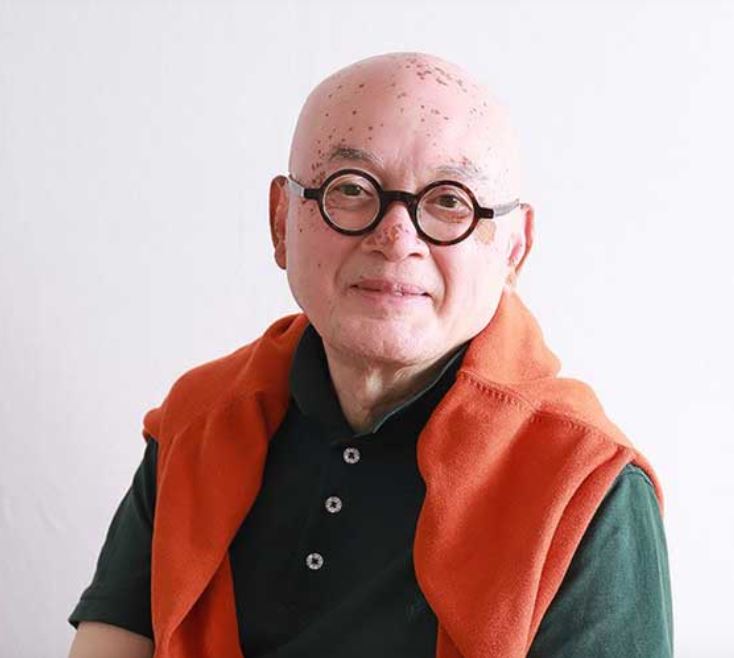

What if your skin affects your identity? For people with vitiligo, this is a daily reality. Dermatologist Marcel Bekkenk and Paul Monteiro, an expert by experience, are fighting for greater understanding and better care.
It started when he was twelve, with a few white spots on his hands that disappeared after a while. But when Paul Monteiro was in his early fifties, the spots returned—and in a big way. "Between 2008 and 2012, I suddenly turned very pale," says Paul (78). "Within four years, my appearance had completely changed." The cause: vitiligo, a chronic autoimmune disease in which the immune system attacks the skin's pigment cells. The result: white spots, sometimes spread all over the body.
Strange looks
The impact of vitiligo goes far beyond the skin, something Paul can speak about like no other. "I've always been very proud of my Indonesian heritage, but suddenly it was no longer visible," he says. “People didn't recognize me or didn't dare look at me when I spoke.” Paul noticed the difference in his work, too. "During meetings, I'd often see people's gazes wandering to my spots. I'd have to bring it up myself: 'I have vitiligo, it's not contagious.' That often broke the ice, but it's still painful that it's necessary."
Major psychological impact
These are experiences that many patients recognize, says dermatologist and professor Marcel Bekkenk. "Vitiligo's visibility makes it devastating. It's still too often seen as an aesthetic condition. But that's a huge disservice to both the disease and the patient. We know from research that people with vitiligo often struggle with sadness, shame, anxiety, or depression. Some patients avoid social situations or relationships and struggle at work." Something that isn't always recognized in healthcare, says the dermatologist. Too little attention is paid to the psychological impact, even though it's significant. There are only a few psychodermatologists, with long waiting lists. Fortunately, patient organizations provide much of the support, but structural support is desperately needed.
Breaking through shame and isolation
Paul also recognizes the need for support, recognition, and practical information. People can find this support at Vitiligo.nl, the Dutch patient association, of which Paul is the chair. “We answer questions that people often do not dare to ask their doctor,” he says. Peer support helps enormously in breaking through feelings of shame and isolation. And it gives people hope: they discover they're not alone.
Search for treatment
For many people with vitiligo, it is a dual quest: dealing with the emotional impact and finding a treatment that really makes a difference. “We can often slow down the disease and in some cases restore pigment.”Dr. Bekkenk explains. Standard treatments consist of creams and light therapy with UVB light. "That requires a lot of patience: it often takes three months for anything to become visible. Good information is therefore crucial." New therapies, such as creams containing so-called JAK inhibitors, offer hope. "They're already available in countries like Germany and Belgium, but they're not yet covered in the Netherlands. That's frustrating, because it could be a real breakthrough for some patients."
Live, enjoy and dare
The fight to restore pigmentation is one thing, but the fight for understanding is another. Because while treatments are improving, patients still too often face ignorance and misunderstandings, says Paul. Fortunately, awareness of the condition is increasing, for example, thanks to the rise of models with vitiligo. And people with white patches are also appearing more and more frequently in video games and on social media. This growing recognition makes it easier for many people to embrace their condition, Paul believes. And that's exactly what he's working hard to achieve. My motto is: live, enjoy, and dare, even with vitiligo. Show who you are, with or without spots.
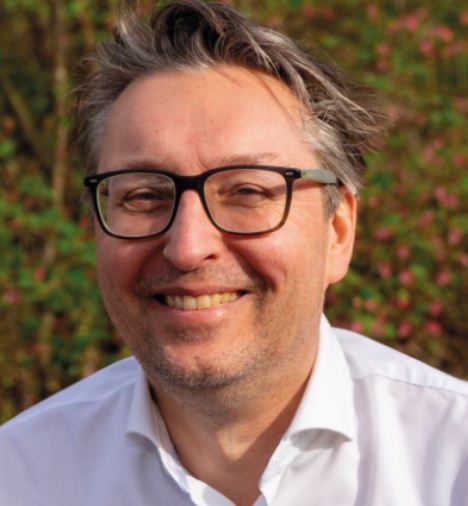
Marcel Bekkenk
Dermatologist